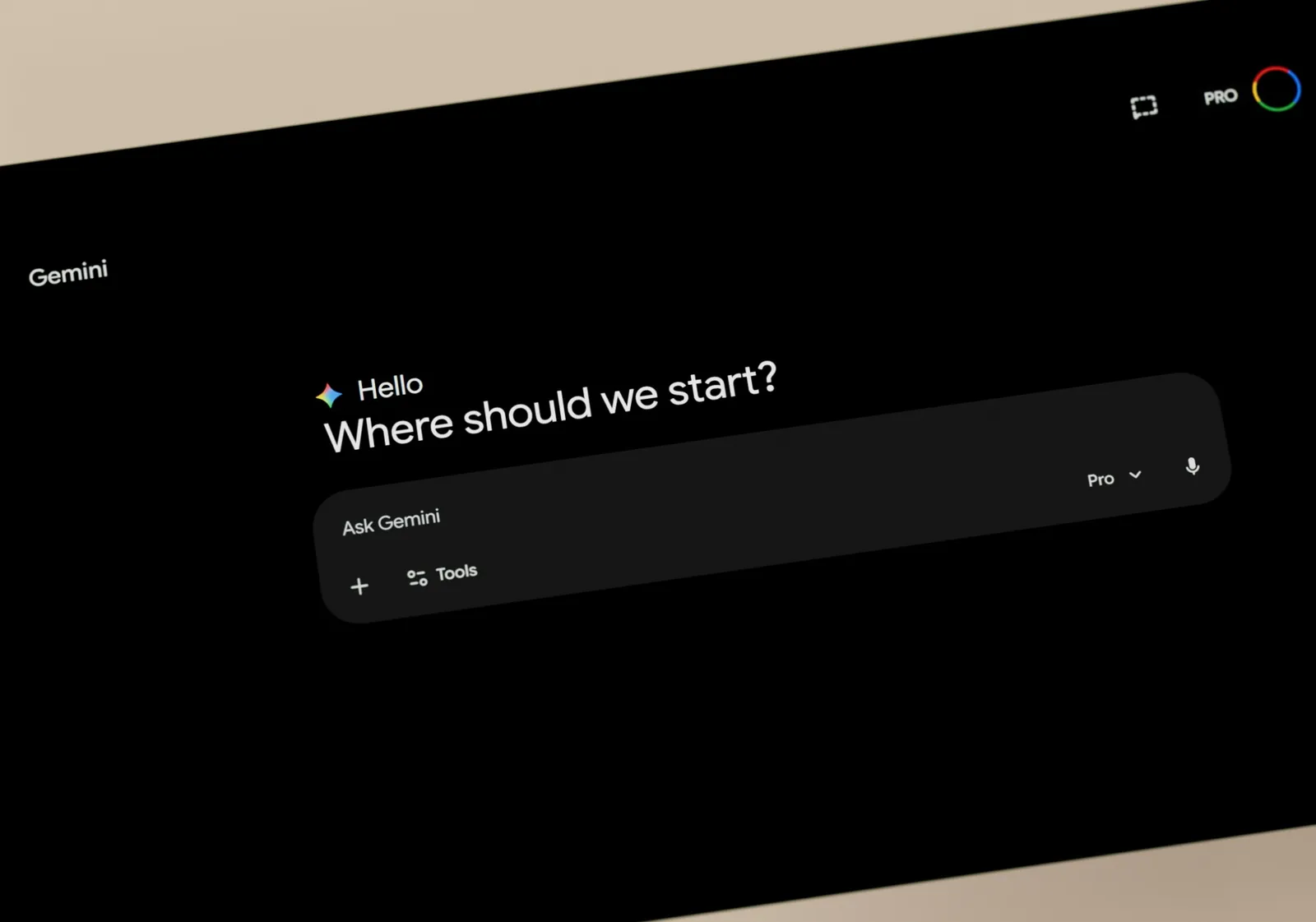
A convincing image can appear in seconds. A landing page can look finished after one prompt. A presentation can arrive with a name, voice, palette and mockups before the first meeting. The speed is real. So is the temptation to mistake a plausible proposal for one that understands the client.
For an agency, the question is no longer “Do we use AI?” It is where does it help, what do we verify, and who takes responsibility for the result? The answer matters for a visual identity as much as for a website. Both will live beyond the screen on which they were generated.
A prompt cannot replace the brief
A tool can propose directions from a paragraph, but it has not spoken to the people who buy, use or maintain the product. When the brief is weak, it can produce a large number of solutions to the wrong problem.
Before generating concepts, we need to understand what is changing in the business, whose trust the brand needs to earn, the language its audience already uses, where the visual system will appear and which constraints apply. A website adds content, flows, technology, account ownership and operation after launch. AI can organize interviews, compare hypotheses or surface missing questions. The team must decide which questions matter and validate the answers with the client.
Four places where AI can help
Explore before committing. Structural variations, art directions or content approaches can open a conversation. They should be presented as explorations, not as identities ready for registration or designs already approved.
Reduce repetitive production. Organizing a page inventory, drafting microcopy, making test data or sketching components can save time. The output still needs to be checked against the brief, actual content and project requirements.
Test difficult scenarios. A website concept can be tried with long headlines, translations, missing images, extensive FAQs and small screens. An assistant can list edge cases; a person verifies that the solutions work in a browser with the client’s content.
Document decisions. AI can turn scattered notes into a record of assumptions, open questions and deliverables. Before sharing it, someone on the team must check that it has not invented approvals, numbers or commitments.
That last use is less showy than generating twenty logos, but often more valuable for delivery.
What a beautiful image cannot prove
An identity needs recognition, distinction, consistency and real applications: favicon, email signature, signage, clothing or an invoice. A generated logo may look impressive in a presentation yet fail at small sizes, resemble another brand or rely on details that cannot be reproduced. Checking for conflicting marks is a separate task. In the United States, the USPTO recommends searching design elements as well as words when evaluating a mark; specific rules and decisions depend on the jurisdiction.
For a website, a screenshot does not prove that navigation works by keyboard, a form explains errors or content keeps its hierarchy on mobile. The W3C accessibility guidelines provide a reference for testing the result, regardless of how the first concept was made. A page that “looks SEO-ready” does not establish that Google can index it or that its text answers real questions. Google’s helpful content guidance emphasizes original value, experience and a clear purpose for the audience.
Client data, rights and trust
Before uploading client files to a tool, review the agreement, permissions and that tool’s settings. A brief may contain nonpublic business information; a brand folder may contain licensed photos, copy or illustrations. Material supplied for design work is not automatically cleared for use as input to every external service.
Nor should we present generated output as a guarantee of originality or exclusive rights. Keep a record of source materials, human decisions, versions and approvals. If AI materially shaped an asset, or the client needs assurances about ownership and use, explain the process and seek appropriate advice for the relevant market. The tool does not sign the contract; the agency is accountable for its delivery.
Transparency can be straightforward: say where AI helped and what people researched, designed, reviewed and approved. Every routine production adjustment need not become a disclosure announcement. The team should be able to answer honestly when the client asks how the work was made.
A review before delivery
Responsible use can become a short shared check across branding and web:
- Purpose: Does the solution address the confirmed problem, or does it merely look plausible?
- Distinctiveness: Can we defend the visual and verbal choices against similar alternatives?
- Evidence: Are there claims, figures, testimonials or outcomes that need verification?
- Rights and privacy: Do we know where inputs came from and what permissions cover the final use?
- Real use: Does it work across intended formats, screens, languages, states and contexts?
- Operation: Can the client edit, maintain and transfer what was delivered?
If the output is a website, add device, accessibility, form, performance and measurement checks before launch. If a client arrives with an AI-generated site, the problem is different: first understand what exists and who controls it. That situation has its own evaluation guide.
The advantage of knowing when to pause
AI can leave more time for the difficult conversation: saying there is not enough information yet, discarding an attractive idea that does not serve the brief, or recommending a less spectacular but more durable implementation. Those decisions are part of doing the job well.
At Smallroom, I work with studios and agencies to carry creative direction into a website that functions and can be maintained. If you are exploring a project involving AI, we can review the brief, platform and technical risks before you promise delivery. Let’s discuss working together or see how we collaborate.